
If you’ve noticed some of Ottawa’s newest intersections looking a little different lately, you're not alone. As the City continues to invest in transportation infrastructure and roadway upgrades, many reconstructed intersections are being built using a modern design known as a protected intersection.
One new feature you may have spotted is the corner apron, found at some protected intersections across the city. While it may seem unfamiliar at first, it's an important design feature that helps improve safety for everyone using the intersection.
Why build protected intersections
A protected intersection is designed to improve safety and mobility for everyone, including people walking, cycling, driving, using mobility devices, or accessing transit. The design separates movements where possible and helps make interactions between different users more visible and predictable.
Protected intersections include a variety of design elements that work together to reduce potential conflicts while helping people move efficiently through an intersection. These features can include dedicated cycling facilities, setback pedestrian crossings, and refuge islands.
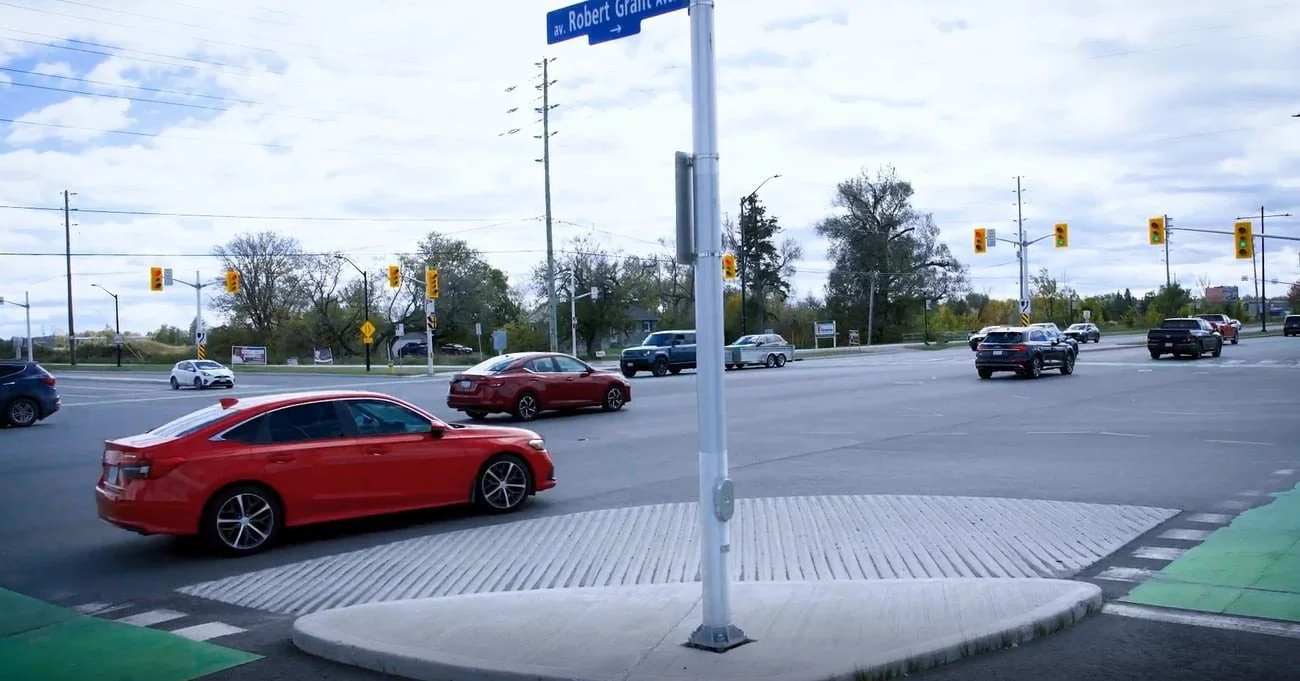
One feature people often ask about is a concrete extension of the intersection corner, known as a corner apron.
What is a corner apron?
The curved shape and textured surface of a corner apron encourages drivers of passenger vehicles to make slower, tighter right turns. Slower turning speeds can help improve awareness of pedestrians and cyclists who may be crossing nearby and can reduce the severity of a collision if it were to occur.
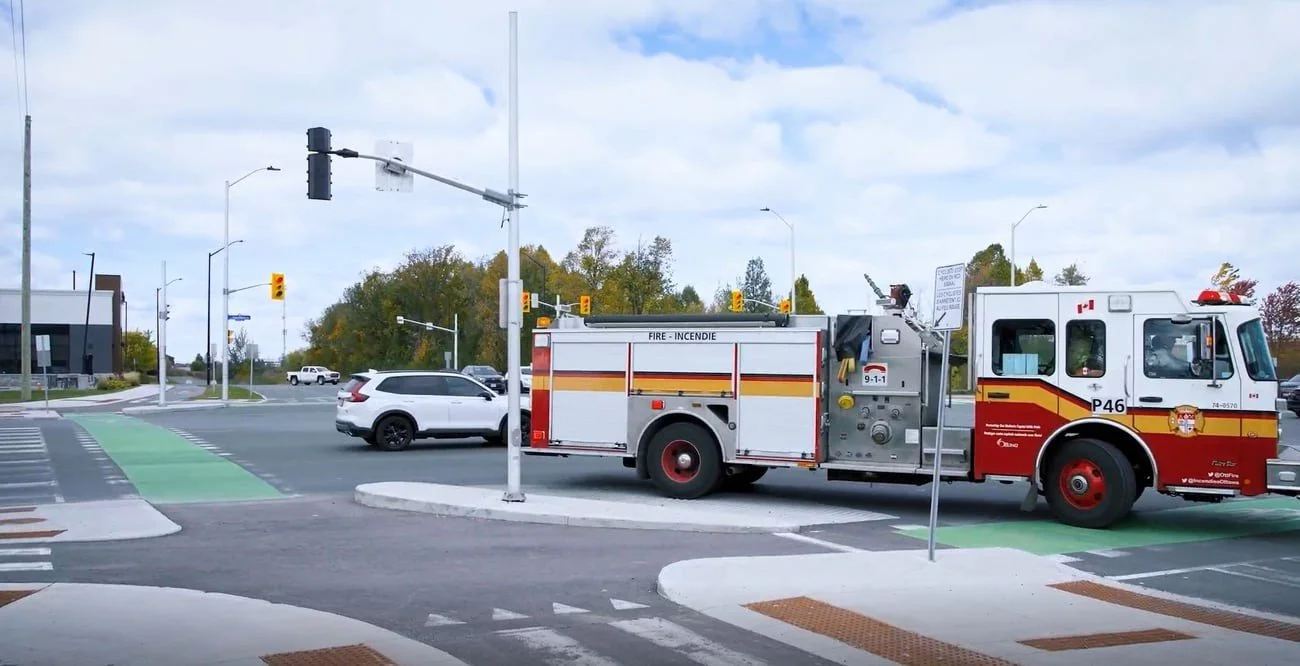
At the same time, corner aprons provide additional space for larger vehicles that require a wider turn, such as buses, fire trucks, and delivery vehicles. These vehicles can safely use the apron when needed while the design continues to guide smaller vehicles through slower turns.
Learning a new intersection design
Protected intersections are becoming more common across Ottawa, with more than 50 completed protected intersections across the city.
While some features may look unfamiliar at first, each element is designed to help improve safety.
Their features create more predictable movements for drivers, cyclists and pedestrians, making intersections safer and easier for everyone to navigate.
Watch the video below to learn more about corner aprons.
Learn more
Protected intersections are designed to improve mobility by creating clearer, more predictable paths for pedestrians, cyclists, and drivers. By reducing conflicts and making movements easier to anticipate, these intersections can support smoother traffic flow for all road users.
To find out more about protected intersections and how they work, see the Protected intersections webpage and the Protected Intersection Design Guide.